Design + the Bees
Design + the Bees
Design + the Bees
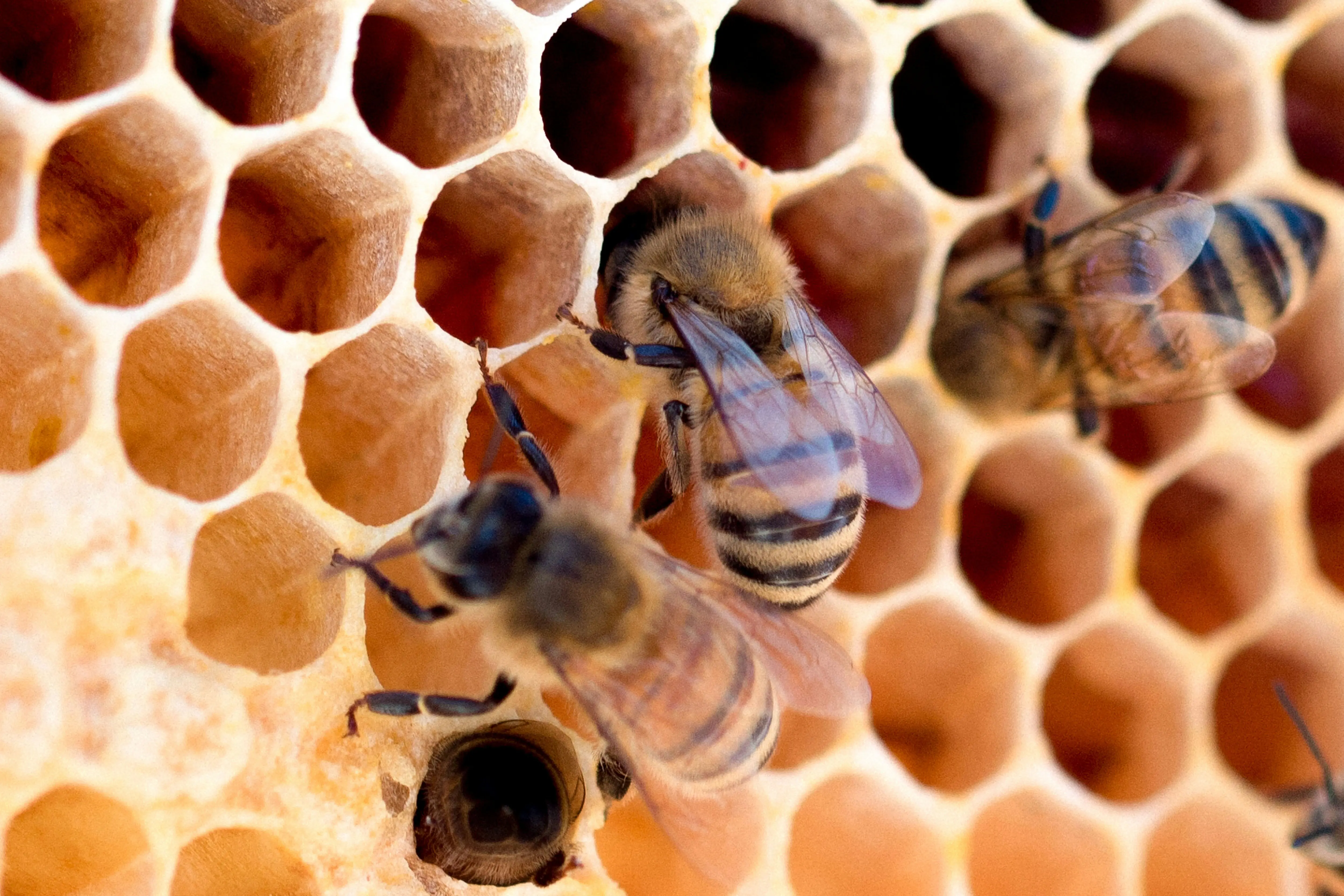
When I was in my early twenties, I spent a few years discerning religious life in a contemplative monastic community. While I was there, the community decided to start keeping bees. I remember the day we picked up our very first hive.
They arrived at the post office. In the mail. (Yes, apparently you can ship bees through the U.S. Postal Service — a queenless colony in a wooden cage, supplied with sugar water for the journey, humming away, waiting to be united with their future queen.)
When we went to pick them up, there was a straggler on the outside of the cage. A single bee that had apparently joined somewhere along the route, clinging to the exterior even though she had no access to the sugar water inside and no connection to the colony.
The other sister I was with tried to shoo her away, but she wasn't budging.
The postal worker just shrugged and said, "That one's not going anywhere."
And she didn't. She rode back with us, still on the outside of the cage, all the way to the monastery. No hive, no queen, no logical reason to stay — just an inexplicable attraction to something that wasn't ready for her yet.
I think about that bee a lot.
Why a bee, specifically
I was afraid of bees when I was little. My great-grandfather kept them — one or two hives in his yard, no suit, no gloves, no smoker. Just him, moving slowly among them like he belonged there. When I asked him how he wasn't scared, he told me bees aren't afraid unless they smell that you are. I watched him long enough to believe him, and the fear left.
But the reason the bee keeps showing up in my work has less to do with him and more to do with what bees actually make.
A honeycomb is delicate, intricate, and simple at the same time. The hexagon is the most space-efficient shape for storing honey using the least wax. Every cell is the same. The whole structure is mathematically inevitable — there's no other shape it could be — and yet the result is one of the most beautiful objects in nature. That beauty isn’t an extra touch. It’s what happens when something fits its purpose completely.
That's what good design feels like to me. Not "form follows function" exactly — that framing makes function the cause and beauty the effect, like beauty is what's left over once the work is done. I think they're the same thing. When something is made carefully, by people who understand what it's for, the beauty isn't added afterward. It's already there, in the doing.
Bees don’t set out to make something pretty. They build the hive, and the hive turns out beautiful.
There's another thing I think about with bees, and it has to do with the postal bee.
She wasn't told to stay. She didn't have a contract with the colony. There was no sign on the cage saying bees welcome. She just recognized something — some signal, some sense of belonging — and stayed close to it, even when there was no obvious reason to.
That's how I want my designs to work. Not shouting to get noticed, not over-explaining itself. Just existing clearly enough that the right people recognize it and want to stick around. Good design doesn’t talk you into paying attention. You just feel it and stay.
Hive-making
I'm venturing more intentionally into freelance after a number of years as an in-house designer for a non-profit, designing within an established brand. Articulating my own voice, deciding what I want this to be — most days, I don't have full access to the thing I'm committing to.
It would be easy to be afraid of that.
But I keep thinking about my great-grandfather, calm in his yard, and that stubborn little postal bee on the outside of the cage. Both of them were doing something unreasonable. Neither of them seemed worried about it.
And neither of them were alone, really. My great-grandfather had his bees. The postal bee had a colony she was following, even from the outside. Bees don't make honey alone — a single bee produces about a twelfth of a teaspoon in her lifetime. Everything meaningful they make is collective.
Freelancing can feel like the opposite of that. One person, one laptop, one quiet desk. But the longer I do this work, the more I notice that nothing I make is really mine alone. The client's vision. The photographer whose image I'm typesetting around. The writer whose words I'm making room for. The reader on the other end of the design, who completes it by paying attention.
Whatever I make, I want it to feel like a hive — every part necessary, nothing extra added, built for the creation of something meaningful.
Photo of bees by Megyyn Pomerleau, via Unsplash.
When I was in my early twenties, I spent a few years discerning religious life in a contemplative monastic community. While I was there, the community decided to start keeping bees. I remember the day we picked up our very first hive.
They arrived at the post office. In the mail. (Yes, apparently you can ship bees through the U.S. Postal Service — a queenless colony in a wooden cage, supplied with sugar water for the journey, humming away, waiting to be united with their future queen.)
When we went to pick them up, there was a straggler on the outside of the cage. A single bee that had apparently joined somewhere along the route, clinging to the exterior even though she had no access to the sugar water inside and no connection to the colony.
The other sister I was with tried to shoo her away, but she wasn't budging.
The postal worker just shrugged and said, "That one's not going anywhere."
And she didn't. She rode back with us, still on the outside of the cage, all the way to the monastery. No hive, no queen, no logical reason to stay — just an inexplicable attraction to something that wasn't ready for her yet.
I think about that bee a lot.
Why a bee, specifically
I was afraid of bees when I was little. My great-grandfather kept them — one or two hives in his yard, no suit, no gloves, no smoker. Just him, moving slowly among them like he belonged there. When I asked him how he wasn't scared, he told me bees aren't afraid unless they smell that you are. I watched him long enough to believe him, and the fear left.
But the reason the bee keeps showing up in my work has less to do with him and more to do with what bees actually make.
A honeycomb is delicate, intricate, and simple at the same time. The hexagon is the most space-efficient shape for storing honey using the least wax. Every cell is the same. The whole structure is mathematically inevitable — there's no other shape it could be — and yet the result is one of the most beautiful objects in nature. That beauty isn’t an extra touch. It’s what happens when something fits its purpose completely.
That's what good design feels like to me. Not "form follows function" exactly — that framing makes function the cause and beauty the effect, like beauty is what's left over once the work is done. I think they're the same thing. When something is made carefully, by people who understand what it's for, the beauty isn't added afterward. It's already there, in the doing.
Bees don’t set out to make something pretty. They build the hive, and the hive turns out beautiful.
There's another thing I think about with bees, and it has to do with the postal bee.
She wasn't told to stay. She didn't have a contract with the colony. There was no sign on the cage saying bees welcome. She just recognized something — some signal, some sense of belonging — and stayed close to it, even when there was no obvious reason to.
That's how I want my designs to work. Not shouting to get noticed, not over-explaining itself. Just existing clearly enough that the right people recognize it and want to stick around. Good design doesn’t talk you into paying attention. You just feel it and stay.
Hive-making
I'm venturing more intentionally into freelance after a number of years as an in-house designer for a non-profit, designing within an established brand. Articulating my own voice, deciding what I want this to be — most days, I don't have full access to the thing I'm committing to.
It would be easy to be afraid of that.
But I keep thinking about my great-grandfather, calm in his yard, and that stubborn little postal bee on the outside of the cage. Both of them were doing something unreasonable. Neither of them seemed worried about it.
And neither of them were alone, really. My great-grandfather had his bees. The postal bee had a colony she was following, even from the outside. Bees don't make honey alone — a single bee produces about a twelfth of a teaspoon in her lifetime. Everything meaningful they make is collective.
Freelancing can feel like the opposite of that. One person, one laptop, one quiet desk. But the longer I do this work, the more I notice that nothing I make is really mine alone. The client's vision. The photographer whose image I'm typesetting around. The writer whose words I'm making room for. The reader on the other end of the design, who completes it by paying attention.
Whatever I make, I want it to feel like a hive — every part necessary, nothing extra added, built for the creation of something meaningful.
Photo of bees by Megyyn Pomerleau, via Unsplash.
If this resonated, I'd love to send more of these your way.
The type on my site includes Perfectly Nineties Handwritten, Barnaby & Adelaide by Jen Wagner Type Co.
Shop with my link for exceptionally crafted fonts — use code jenrego15 for 15% off.



Based in Sacramento, California
© 2026 Jen Rego. All rights reserved.
Jen Rego
Jen Rego
Jen Rego
Based in Sacramento, California
Based in Sacramento, California
Based in Sacramento, California
The type on my site includes Perfectly Nineties Handwritten & Adelaide by Jen Wagner Type Co.
Shop with my link for exceptionally crafted fonts — use code jenrego15 for 15% off.
The type on my site includes
Perfectly Nineties Handwritten, Barnaby, & Adelaide
by Jen Wagner Type Co.
Shop with my link for exceptionally crafted fonts
— use code jenrego15 for 15% off.
The type on my site includes
Perfectly Nineties Handwritten, Barnaby & Adelaide by Jen Wagner Type Co.
Shop with my link for exceptionally crafted fonts — use code jenrego15 for 15% off.