On Lascaux + Logos
On Lascaux + Logos
On Lascaux + Logos
Seventeen thousand years ago, someone stood in a cave in what is now southwestern France and made a mark that still communicates today.
Just a hand, a pigment, and a decision about what to include and what to leave out.
I studied art history before I studied photography, and before I studied design. But I continually find that it's relevant to both.
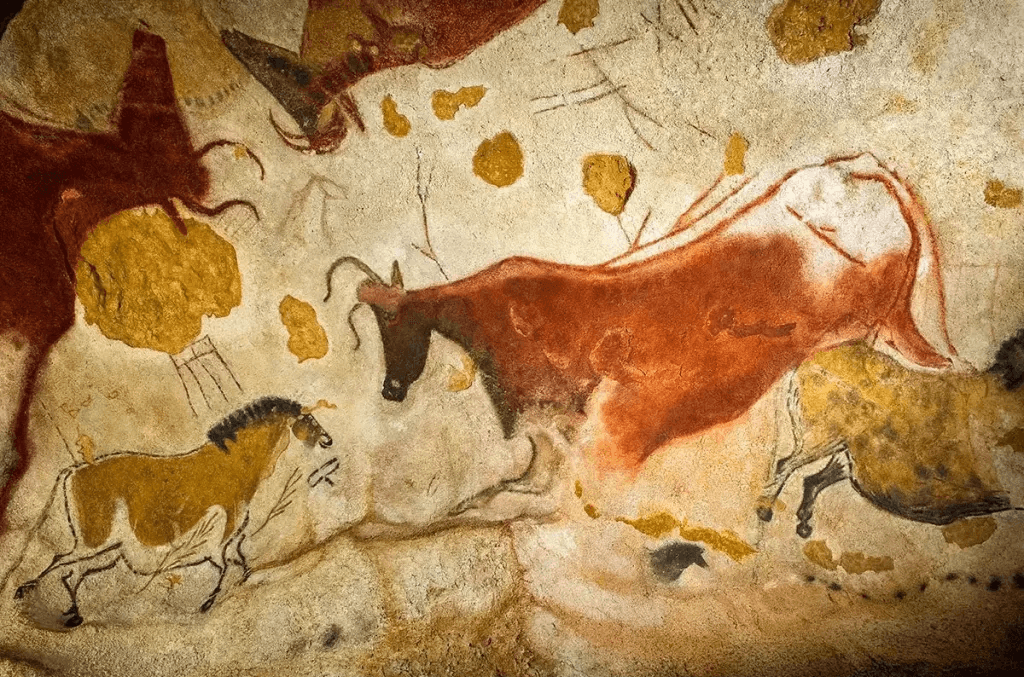
Look at the animals across the walls of Lascaux. They aren't photographs. They don't have every detail an aurochs or a horse or a stag has. And yet nobody has ever looked at them and wondered what they were. The painters understood something that every good designer eventually figures out: simplicity isn't the absence of information. It's the result of knowing which information is essential and having the discipline to stop there.
That's the hardest part of most design. Not adding. Stopping.
The Lascaux painters didn't render individual hairs or hoofprints. They found the gesture — the curve of the back, the weight of the body, the momentum of the animal mid-stride — and committed to it. Everything else was left out. Not because they couldn't see it, but because it wasn't necessary for the mark to mean what it needed to mean.
We don't know exactly why they made these images. Ritual, hunting magic, storytelling, territorial marking. Perhaps some combination of all of that. But we know they were intentional. The placement of each animal, the scale, the relationship between figures — none of it reads like accident. These were considered marks made by skilled hands that had thought carefully about what they were doing and why.
That intentionality is what makes them still legible today.
The best logos work the same way. Not clever or complicated — considered. Every line there for a reason. Everything unnecessary removed. What remains is simple enough to be recognized instantly, and intentional enough to outlast the moment it was made for.
Seventeen thousand years is a long time to stay legible. No pressure.
What's a logo or symbol that you think gets this exactly right — where nothing could be added or removed?
Note: the original Lascaux cave has been closed since 1963 to preserve the paintings from light and humidity damage. This image is from Lascaux II, a faithful replica created in 1983. The irony of protecting a 17,000-year-old image by hiding it from the people who would most want to see it is not lost on me. But I get it.
Seventeen thousand years ago, someone stood in a cave in what is now southwestern France and made a mark that still communicates today.
Just a hand, a pigment, and a decision about what to include and what to leave out.
I studied art history before I studied photography, and before I studied design. But I continually find that it's relevant to both.
Look at the animals across the walls of Lascaux. They aren't photographs. They don't have every detail an aurochs or a horse or a stag has. And yet nobody has ever looked at them and wondered what they were. The painters understood something that every good designer eventually figures out: simplicity isn't the absence of information. It's the result of knowing which information is essential and having the discipline to stop there.
That's the hardest part of most design. Not adding. Stopping.
The Lascaux painters didn't render individual hairs or hoofprints. They found the gesture — the curve of the back, the weight of the body, the momentum of the animal mid-stride — and committed to it. Everything else was left out. Not because they couldn't see it, but because it wasn't necessary for the mark to mean what it needed to mean.
We don't know exactly why they made these images. Ritual, hunting magic, storytelling, territorial marking. Perhaps some combination of all of that. But we know they were intentional. The placement of each animal, the scale, the relationship between figures — none of it reads like accident. These were considered marks made by skilled hands that had thought carefully about what they were doing and why.
That intentionality is what makes them still legible today.
The best logos work the same way. Not clever or complicated — considered. Every line there for a reason. Everything unnecessary removed. What remains is simple enough to be recognized instantly, and intentional enough to outlast the moment it was made for.
Seventeen thousand years is a long time to stay legible. No pressure.
What's a logo or symbol that you think gets this exactly right — where nothing could be added or removed?
Note: the original Lascaux cave has been closed since 1963 to preserve the paintings from light and humidity damage. This image is from Lascaux II, a faithful replica created in 1983. The irony of protecting a 17,000-year-old image by hiding it from the people who would most want to see it is not lost on me. But I get it.
If this resonated, I'd love to send more of these your way.
The type on my site includes Perfectly Nineties Handwritten, Barnaby & Adelaide by Jen Wagner Type Co.
Shop with my link for exceptionally crafted fonts — use code jenrego15 for 15% off.



Based in Sacramento, California
© 2026 Jen Rego. All rights reserved.
Jen Rego
Jen Rego
Jen Rego
Based in Sacramento, California
Based in Sacramento, California
Based in Sacramento, California
The type on my site includes Perfectly Nineties Handwritten & Adelaide by Jen Wagner Type Co.
Shop with my link for exceptionally crafted fonts — use code jenrego15 for 15% off.
The type on my site includes
Perfectly Nineties Handwritten, Barnaby, & Adelaide
by Jen Wagner Type Co.
Shop with my link for exceptionally crafted fonts
— use code jenrego15 for 15% off.
The type on my site includes
Perfectly Nineties Handwritten, Barnaby & Adelaide by Jen Wagner Type Co.
Shop with my link for exceptionally crafted fonts — use code jenrego15 for 15% off.